Automations
If a person is copying data from one system into another, that is not a people problem. It is a missing pipe, and pipes can be built.
What it is
We connect the systems you already pay for and put the repetitive work on rails: lead routing, document handling, reporting, handoffs between teams, and the reconciliation nobody wants to do on a Friday.
Sometimes that is a webhook and a queue. Sometimes it needs an agent to decide which branch to take. We pick the dumbest thing that holds, because the dumbest thing is the one that still works in eighteen months.
How we build it
Map the process people actually run
Not the one in the handbook. We sit with the person doing the work and follow it end to end. The exceptions they handle by memory are the whole specification.
Automate the branch, keep the human at the fork
Straight-through where the rule is unambiguous, a person in the loop where judgement is real. A queue with a bad handoff is worse than no automation at all.
Make failure loud
Every job reports what it did, what it skipped and why. Silent automation is the kind you discover six months later when the numbers stop adding up.
Who it is for
A good fit if
- Operations teams running the same monthly reporting cycle by hand.
- Businesses where one person is the integration layer between three tools.
- Any workflow where a missed step costs real money and nobody notices until month end.
Not a fit if
- Processes you intend to change next quarter. Automate the stable version.
- Volumes so low that doing it manually is genuinely cheaper.
See it
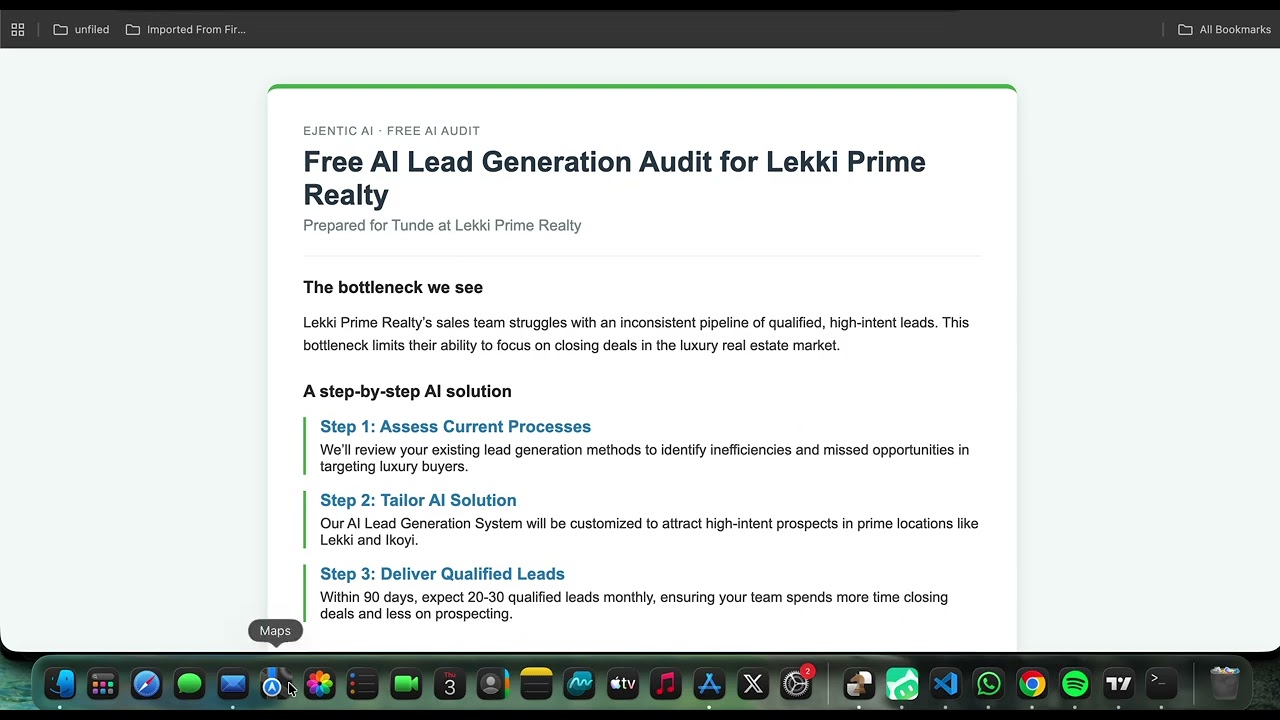
A reference build
Outbound, end to end
The lead generation system is the clearest automation we run: research a market, filter it against a real definition of a good fit, write an approach that references something true about the company, and book the meeting. Each stage hands its output to the next and logs what it decided.
- Research, qualification, drafting and booking in one chain
- Every stage logs what it decided and what it rejected
- A human reviews the approach before anything is sent
This is a system we run, not a client case study. We do not publish client numbers we cannot show you the workings for.
Talk to someone who builds this
No qualification call, no discovery deck. Describe the work and we will tell you whether this is the right line for it.